Quick answer
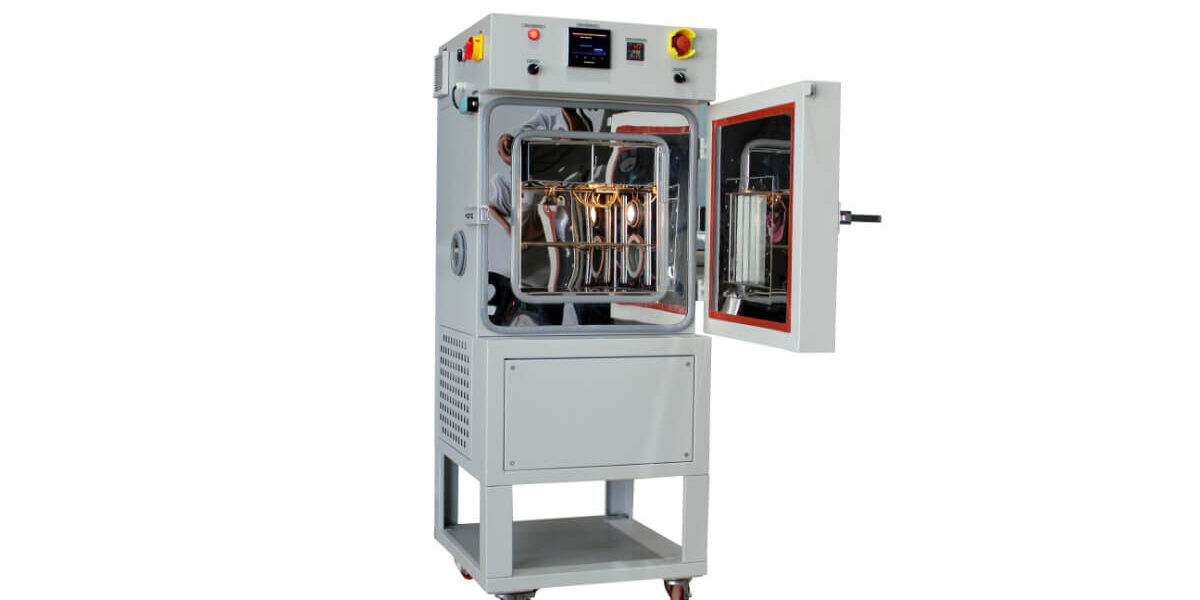
Benchtop environmental chambers for electronics and PCB testing are compact chambers that run temperature cycling, damp heat, cold and dry heat tests on boards, modules and small assemblies, often while powered and monitored. T3 benchtop units cover -70°C to +180°C with optional 10 to 98% RH in a 30 to 150 L workspace.
Key facts
- Thermal cycling fatigue of solder joints, vias and leads is the leading wear-out failure mode for electronics.
- Temperature cycling follows JEDEC JESD22-A104; damp heat follows IEC 60068-2-78; cold and dry heat follow IEC 60068-2-1 and -2-2.
- T3 benchtop chambers run -70°C to +180°C with optional 10 to 98% RH humidity control.
- T3 benchtop workspace ranges from 30 to 150 L.
- Controllers are Watlow F4T or Crimson Red Lion touchscreens with data logging and Ethernet/Modbus remote access.
Electronics fail in the field for reasons that have nothing to do with the circuit design — a solder joint that fatigues after a thousand thermal cycles, a board that corrodes in humidity, a connector that cracks in the cold. A benchtop environmental test chamber lets an electronics team catch all of that on the bench, before it ships.
Electronics and PCBs are the single most common reason a lab buys a benchtop environmental chamber. The parts are small, the test volumes are modest, and the questions are urgent: will this board survive temperature cycling, damp heat, and cold start-up over its service life? A compact benchtop environmental test chamber answers those questions without tying up a full-size or walk-in chamber.
This guide covers why electronics need environmental testing, the specific tests a benchtop chamber runs, and the standards that govern them.
Why electronics and PCBs need environmental testing
A circuit that works perfectly on the bench at room temperature can still fail in service, because the real world applies stresses the schematic never sees:
- Thermal cycling expands and contracts solder joints, vias, and component leads until they fatigue and crack — the leading wear-out failure mode for electronics.
- Humidity and damp heat drive corrosion, dendrite growth, and leakage currents, and can delaminate PCBs.
- Cold extremes stiffen materials, shift component values, and expose cold-start and condensation problems.
- Combined temperature + humidity is how these stresses actually arrive in the field — together, not one at a time.
Reproducing those conditions on the bench turns unknown field risk into a measured, repeatable test result.
Tests a benchtop chamber runs on electronics
- Temperature cycling — repeated hot-to-cold cycles to fatigue solder joints and interconnects (per JEDEC JESD22-A104).
- Damp heat, steady state — sustained temperature and humidity to expose corrosion and insulation breakdown (IEC 60068-2-78).
- Cold and dry heat — low- and high-temperature operating and storage limits (IEC 60068-2-1 and -2-2).
- Temperature/humidity operating tests — powered boards run and monitored while the chamber holds a setpoint, to catch faults that only appear under environmental stress.
Because boards are often powered and monitored during the test, a chamber’s data logging and remote access matter as much as its temperature range — you need a time-stamped record of chamber conditions alongside the device’s behaviour.
The specs that matter for electronics work
- Temperature range: T3 benchtop chambers run −70°C to +180°C (configurable), covering cold-start, storage, and accelerated high-temperature testing.
- Humidity: optional 10–98% RH control for damp-heat and condensation work.
- Workspace: 30–150 L — right-sized for boards, modules, and small assemblies.
- Control & logging: Watlow F4T or Crimson Red Lion touchscreen controllers with integrated data logging, alerts, and Ethernet/Modbus remote access for unattended runs.
Standards for electronics environmental testing
- JEDEC JESD22-A104 — temperature cycling for semiconductor and electronic components.
- IEC 60068-2-1 / -2-2 / -2-78 — cold, dry heat, and damp-heat environmental tests.
- MIL-STD-810 — defense/rugged electronics environmental qualification.
- RTCA DO-160 — environmental testing for airborne (avionics) equipment.
How T3 supports electronics teams. T3’s benchtop environmental chambers run −70°C to +180°C with optional 10–98% RH in a 30–150 L workspace, built to JEDEC JESD22-A104, IEC 60068-2-1/-2-2/-2-78, MIL-STD-810, and RTCA DO-160. Cascade refrigeration, touchscreen control, integrated data logging, and Ethernet/Modbus remote access make them suited to powered, monitored PCB testing. They are part of T3’s full range of environmental test chambers — US-built with lifetime engineering support. New to benchtop testing? Start with what a benchtop environmental chamber is.
Frequently Asked Questions
What environmental tests do electronics need?
Most electronics need temperature cycling (JESD22-A104), damp-heat (IEC 60068-2-78), and cold/dry-heat testing (IEC 60068-2-1/-2-2), plus MIL-STD-810 or DO-160 for rugged and avionics products.
Can a benchtop environmental test chamber test a powered PCB?
Yes. Boards can be powered and monitored during the test while the chamber holds temperature and humidity; data logging and remote access record chamber conditions alongside the device’s behaviour.
What temperature range is needed for electronics testing?
It depends on the product, but T3 benchtop chambers cover −70°C to +180°C, which spans cold-start, storage, and accelerated high-temperature testing for most electronics.
Why use a benchtop chamber instead of a full-size one?
Electronics samples are small, so a 30–150 L benchtop chamber gives the same control and compliance in a fraction of the footprint and cost of a full-size or walk-in unit.
Testing boards or components? Request a quote and a T3 engineer will configure a benchtop environmental chamber for your samples and standards.
More on benchtop chambers
- How to choose a benchtop environmental chamber
- What is a benchtop environmental chamber?
- Benchtop vs reach-in vs walk-in chambers
- Benchtop environmental chambers (product)
Standards referenced
