Quick answer
Environmental testing for EV batteries exposes cells, modules and packs to temperature cycling, humidity, thermal shock, cold soak and thermal runaway containment tests to verify safety and performance. These tests help prevent thermal runaway, capacity loss, recalls and fires, and support compliance with standards such as IEC 62660, UN 38.3, ISO 12405 and UL 2580.
Key facts
- Humidity testing for EV batteries is conducted in humidity chambers at conditions such as 85°C/85% RH.
- Cold crank and soak testing holds batteries at -20°C or lower for extended periods to validate cold-start capability.
- EUCAR Hazard Levels define battery reaction severity on a scale of 0 to 7.
- T3 battery chambers cover -70°C to +180°C and 10% to 98% RH, with ramping up to 10°C/min.
- A custom 1000L T3 abuse chamber helped an EV startup pass UN 38.3 testing on the first attempt.
Introduction
As the world accelerates toward an electric future, EV batteries are at the heart of innovation — and risk. These high-energy cells must perform in extreme temperatures, endure vibration, and resist degradation over time.
To ensure safety, reliability, and compliance, environmental testing isn’t optional — it’s mission-critical.
At T3, we design environmental test chambers specifically engineered to meet the unique demands of EV battery testing — from R&D to mass production.
Why EV Batteries Require Environmental Testing
EV batteries operate under demanding real-world conditions:
-
Arctic cold and desert heat
-
Daily charge/discharge cycles
-
High-humidity coastal regions
-
Road vibrations and thermal shocks
-
Storage and shipping across climates
Failures can lead to:
-
Thermal runaway
-
Loss of charge capacity
-
Product recalls or compliance failure
-
In the worst case, fire or explosion
That’s why battery cells, modules, and packs must be tested for performance and safety under environmental stress.
Key Environmental Tests for EV Batteries
1. Temperature Cycling
-
Simulates daily and seasonal temperature changes
-
Tests expansion, contraction, electrolyte stability
-
Performed in temperature or thermal shock chambers
2. Humidity Testing
-
Identifies moisture ingress risks
-
Detects corrosion of terminals and degradation of separators
-
Conducted in humidity chambers (e.g., 85°C/85% RH)
3. Thermal Runaway Containment
-
Assesses battery’s response to overheating or internal short
-
Safety-rated chambers with blast-proof ports, pressure relief, gas extraction
-
Aligned with EUCAR Hazard Levels 0–7
4. Thermal Shock Testing
-
Rapid shifts between hot and cold environments
-
Simulates parking in sun then sudden cooling
-
Uses two-zone or three-zone thermal shock chambers
5. Cold Crank & Soak Testing
-
Validates cold-start capability
-
Batteries held at -20°C or lower for extended periods
Standards for EV Battery Testing
T3 chambers are engineered to help clients meet international compliance requirements:
| Standard | Purpose |
|---|---|
| IEC 62660-1/2/3 | Performance & abuse testing for lithium batteries |
| UN 38.3 | Transportation of Dangerous Goods regulations |
| ISO 12405 | Battery systems in electric vehicles |
| UL 2580 | Electrical energy storage safety |
| SAE J2464 / J2929 | Abuse testing in electric vehicles |
| EUCAR Hazard Levels | Defines 0–7 severity of battery reactions |
Features of T3 Battery Test Chambers
At T3, we design chambers specifically for safe, repeatable EV battery testing:
Safety First:
-
Explosion-proof construction (EX-rated optional)
-
Reinforced doors, gas suppression, blast relief vents
-
Fire-resistant inner liner
-
Over-temperature cutoffs + alarms
High Performance:
-
Temp range: -70°C to +180°C
-
RH range: 10% to 98%
-
Rapid ramping & recovery (up to 10°C/min)
-
Support for heavy battery packs with structural floor reinforcements
Smart Monitoring:
-
T3 controller with real-time profiling & logging
-
Remote data access + alerts
-
Supports integration with BMS, CANbus, and sensors
Applications Across the EV Lifecycle
| Stage | Chamber Use |
|---|---|
| R&D | Design validation, thermal abuse modeling |
| Pre-production | Cycle life testing, performance at extremes |
| Mass production | Batch verification, quality control |
| Shipping/storage | Stability under long-term exposure |
| Regulatory approval | Compliance to IEC, UN, SAE standards |
T3 in Action: Battery Chamber Case Study
A global EV startup approached T3 for a battery abuse test solution.
We delivered a custom 1000L test chamber with:
-
Pressure relief panel
-
Humidity + temp cycling
-
Integrated smoke/gas extraction
-
CANbus interfacing with battery BMS
The client passed UN 38.3 tests on the first attempt and now uses T3 chambers in 3 countries.
Did You Know?
🔹 A single EV battery can store the equivalent energy of 50 laptop batteries — which is why test safety matters.
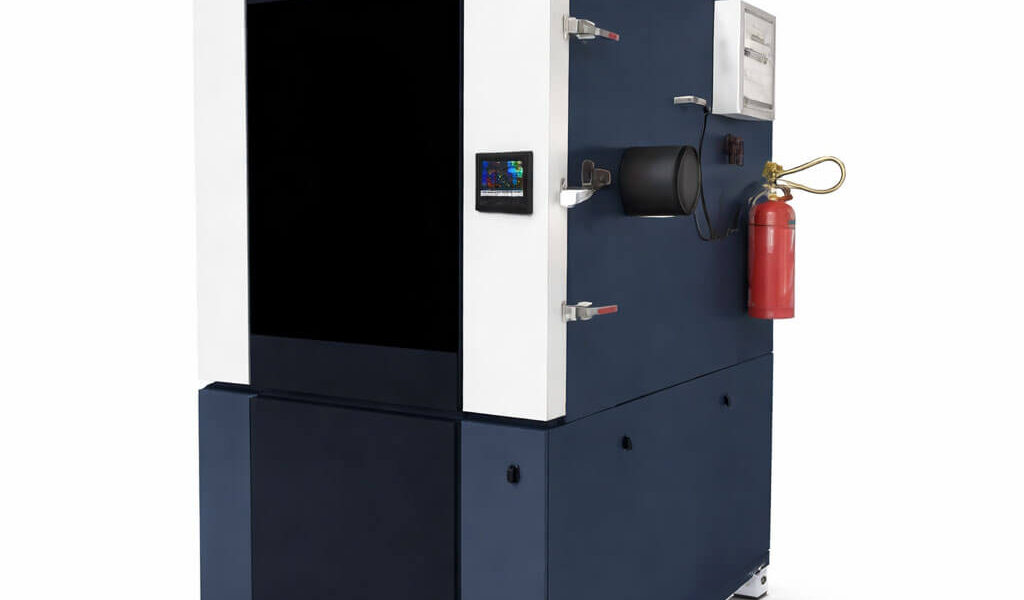
🔹 T3 battery chambers are available in reach-in and walk-in formats, with modular fire suppression systems.
Ready to Test EV Batteries Safely?
T3 is your partner in precision, compliance, and peace of mind.
Our battery test chambers are designed, built, and supported in the USA, with customization available worldwide.
Let’s build a chamber that drives your EV innovation forward — safely.
Related: T3’s battery test chambers are built for thermal-runaway and UN 38.3 testing.
Frequently asked questions
What environmental tests are required for EV batteries?
Key environmental tests for EV batteries are temperature cycling, humidity testing, thermal runaway containment, thermal shock testing, and cold crank and soak testing. Together they assess expansion and contraction, moisture ingress and corrosion, response to overheating, rapid hot-cold transitions and cold-start capability.
Which standards apply to EV battery environmental testing?
EV battery testing standards include IEC 62660-1/2/3 for lithium battery performance and abuse, UN 38.3 for transport of dangerous goods, ISO 12405 for EV battery systems, UL 2580 for energy storage safety, SAE J2464 and J2929 for abuse testing, and EUCAR Hazard Levels for reaction severity.
What safety features does an EV battery test chamber need?
An EV battery test chamber needs explosion-proof construction, reinforced doors, gas suppression, blast relief vents, a fire-resistant inner liner, and over-temperature cutoffs with alarms. Thermal runaway containment chambers also use blast-proof ports, pressure relief and gas extraction, aligned with EUCAR Hazard Levels 0 to 7. Modular fire suppression systems are available in reach-in and walk-in formats.
How is thermal shock testing done on EV batteries?
Thermal shock testing on EV batteries applies rapid shifts between hot and cold environments, simulating a vehicle parked in the sun followed by sudden cooling. It is performed in two-zone or three-zone thermal shock chambers, and is one of several environmental stress tests, alongside temperature cycling and humidity testing, used to confirm battery safety and performance before regulatory approval.
Standards referenced