
Quick answer
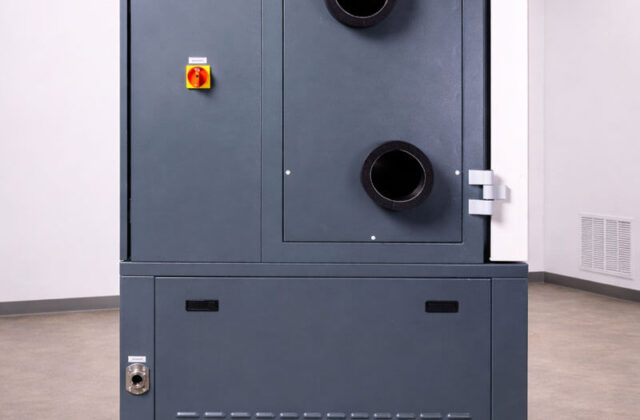
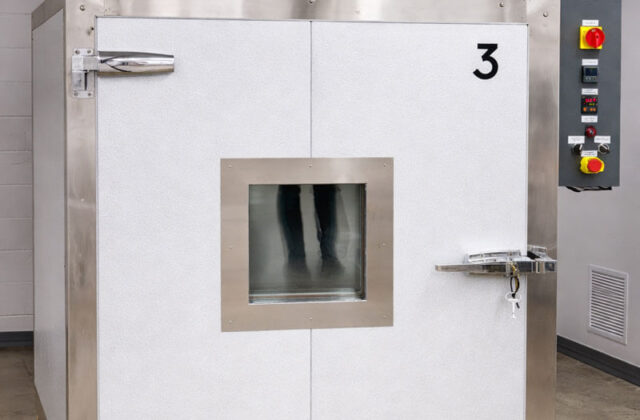
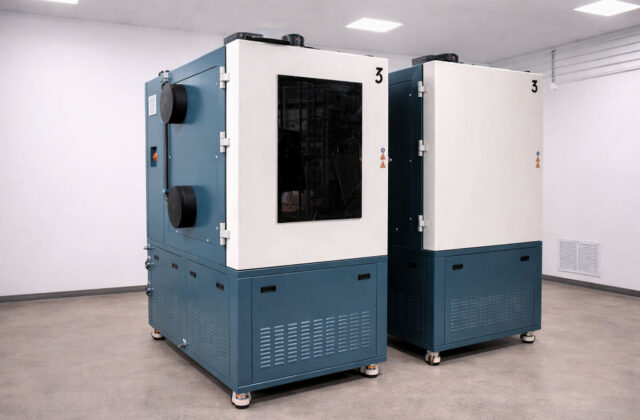
A walk-in environmental chamber is a room-sized, insulated enclosure that controls temperature, and usually humidity, across a volume large enough for people, pallets, or full assemblies. Walk-ins suit large specimens, high-volume conditioning, long-term stability storage, and tests technicians must enter. T3 custom-builds walk-in chambers to the facility footprint, range, and test standards.
Key facts
- A reach-in chamber covers roughly 150 to 1,500 L; walk-in chambers scale to room size.
- Walk-in chambers use panel construction, a personnel door, and often ramp or floor access for rolling equipment inside.
- Typical walk-in features include data logging, remote monitoring, safety interlocks, shelving, and cable ports.
- Walk-in chambers run the same standards as smaller chambers, including MIL-STD-810, IEC 60068, ASTM, and ICH stability protocols.
- Drive-in chambers sit beyond walk-ins for full-vehicle testing.
When your test items are too big for a reach-in — full assemblies, pallets, racks of product, or several units at once — you need a walk-in. Here’s what a walk-in environmental chamber is, when to choose one, and how it’s configured.
A walk-in environmental chamber is a room-sized temperature and humidity chamber you can walk into — sized for large specimens, high volumes, or whole test batches. T3 builds walk-in chambers custom to the footprint, temperature/humidity range, and access your program needs.
What is a walk-in environmental chamber?
A walk-in environmental chamber is a large, insulated, room-scale enclosure that controls temperature — and usually humidity — across a volume big enough to hold people, pallets, or full assemblies. Unlike a benchtop or reach-in unit, it is built into the facility with panel construction, a personnel door, and often ramp or floor access for rolling equipment in.
When to choose a walk-in
- Large specimens — vehicles’ subsystems, aerospace structures, batteries at pack/module scale, furniture, or industrial equipment.
- High throughput — conditioning many units at once for production or stability programs.
- Stability & shelf-life storage — pharma and materials programs that hold large inventories at setpoint for weeks.
- Access — when technicians need to enter to instrument or observe the test.
Walk-in vs reach-in
A reach-in chamber (roughly 150–1,500 L) suits smaller specimens and bench-side work; a walk-in scales to whole rooms. Choose reach-in for components and small batches, walk-in for large items, high volume, or walk-in access. Between them sits the drive-in chamber for full-vehicle work.
How walk-in chambers are configured
Walk-ins are custom-built: panel insulation and size to the space, temperature (and optional humidity) range to the test standard, refrigeration sized to the load, plus data logging, remote monitoring, safety interlocks, and access features (ramps, shelving, cable ports). They run the same standards as smaller chambers — MIL-STD-810, IEC 60068, ASTM, and ICH stability protocols.
How T3 handles walk-ins. T3 designs and manufactures custom walk-in environmental chambers sized to your facility and standards, part of the full range of environmental test chambers — US-built with lifetime engineering support and service for any make.
Frequently Asked Questions
What is a walk-in environmental chamber?
A room-sized temperature and humidity chamber you can walk into, built for large specimens, high volumes, or full test batches that won’t fit a reach-in unit.
What is the difference between a walk-in and a reach-in chamber?
A reach-in (about 150–1,500 L) suits small specimens and bench work; a walk-in scales to room size for large items, high throughput, and walk-in access.
Are walk-in chambers custom-built?
Yes. Walk-ins are configured to your footprint, temperature/humidity range, load, access, and the standards you test to.
What are walk-in chambers used for?
Large-specimen testing, high-volume conditioning, and long-term stability/shelf-life storage across aerospace, automotive, battery, pharma, and industrial programs.
Need a walk-in sized to your facility? Request a quote and a T3 engineer will design one for your specimens and standards.
Standards referenced